Sea Pigs Have a Bacterial Tenant, and the Rent Is Still Unknown
University of Tokyo researchers found a new bacterium ruling the body wall of deep-sea sea cucumbers, with a genome one-seventh the size of E. coli's.

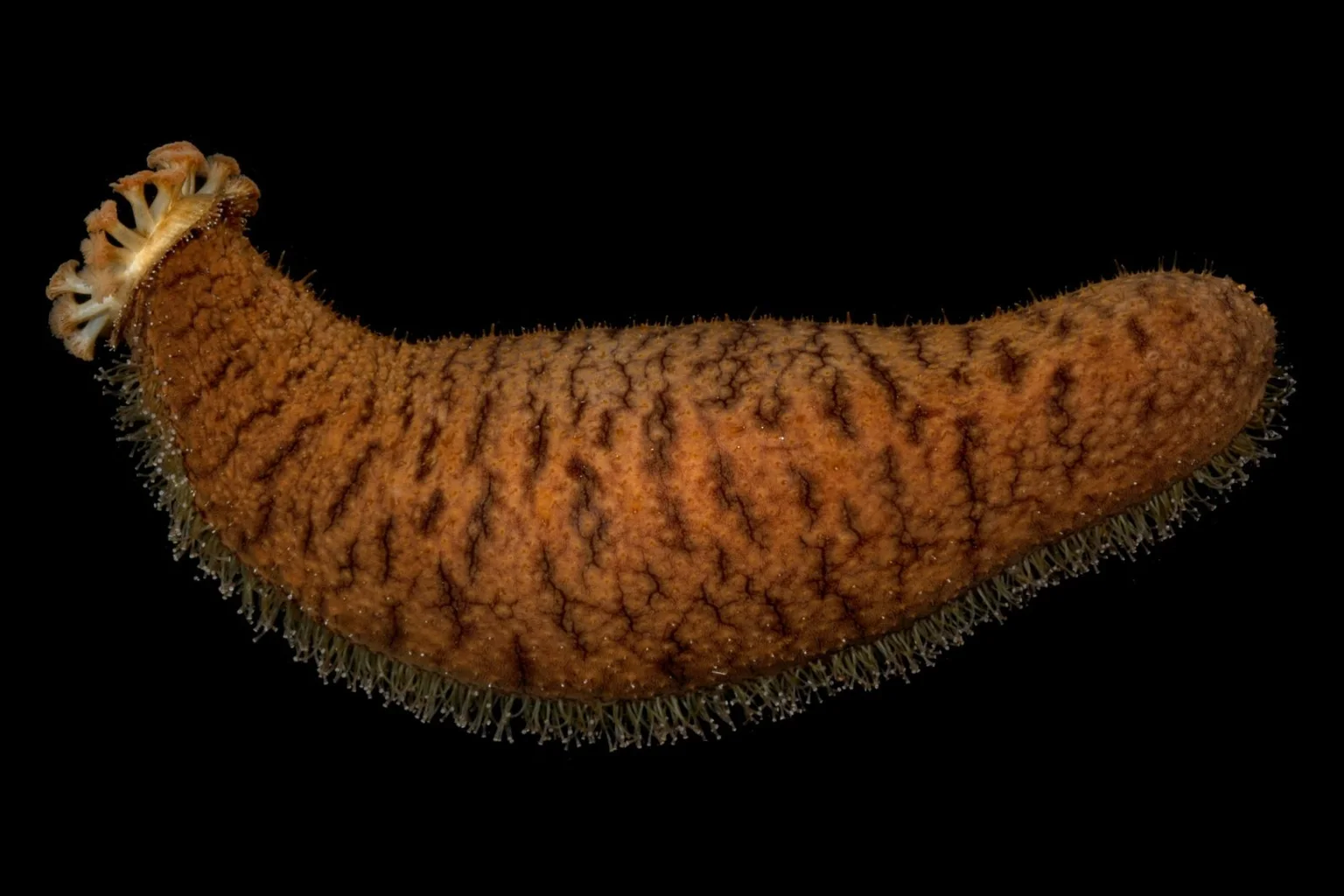
Researchers led by the University of Tokyo have identified a previously unknown bacterium living in the body wall, just beneath the skin, of deep-sea sea pigs, a kind of sea cucumber. In a study published Nov. 11 in the journal ISME Host Microbe, they report that the microbe dominates that tissue and carries a very small genome crowded with genes for giant surface proteins.1
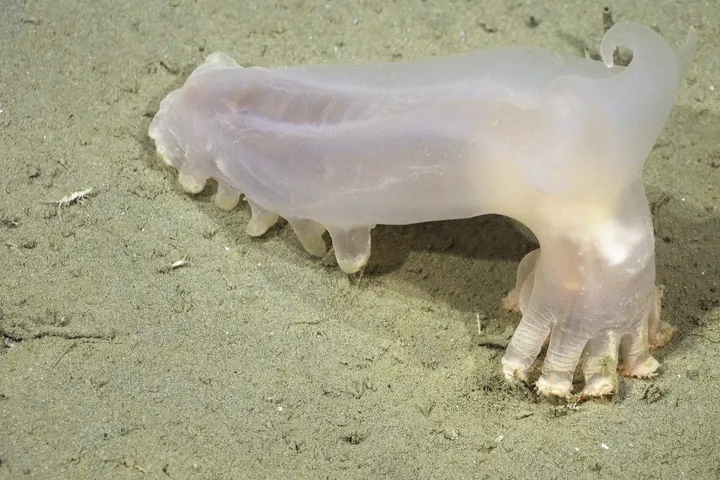
A sea pig is not a pig. It is a sea cucumber up to about 15 centimeters (6 inches) long that walks across the seafloor on enlarged tube feet, eating organic matter as it goes. Sea pigs can live as deep as about 6,000 meters, and young king crabs use them for shelter.1
These animals matter more than their size suggests. In some deep-sea areas, sea cucumbers make up more than 90% of the biomass of large bottom-dwelling animals, so what lives inside them is a real piece of how the deep ocean works.1
How the team found it
A team from several institutions in Japan extracted DNA from various tissues of eight sea pigs collected on deep-sea expeditions. They rebuilt the genomes of the most common bacteria, then used fluorescence imaging, which makes specific microbes glow under a microscope, to see where those bacteria sat in the animals’ tissue.12
One bacterium stood out, and it was not a close call.
“What we found was that in body-wall samples from the three sea pig species, one bacterium accounted for more than 70% of bacterial 16S rRNA gene sequences (a genetic marker used in identifying bacteria), so it truly dominated the body wall,” lead author Yu Yoshida, a Ph.D. student in the University of Tokyo’s Graduate School of Frontier Sciences, said in the university’s announcement.1
The microbe belongs to a group of symbiotic bacteria linked to marine invertebrates, the phylum Mycoplasmatota, but it differs a lot from known members. The researchers propose it as a new genus and species, Candidatus Abyssoplasma scotoplanesicola. The “Candidatus” means the name is provisional.12
Yoshida noted in the announcement that “very few studies of deep-sea species have linked this information to the bacteria’s location within host tissues,” which is part of what makes the find useful.1
A small genome with a big outer layer
The bacterium’s genome is only 649,000 bases long, about one-seventh the size of the genome of E. coli, the familiar gut bacterium.1
Yet 27.6% of that genome codes for groups of proteins associated with the cell’s surface. For a genome this small, spending more than a quarter of it on the outside is a bit like building a tiny house that is mostly porch.1
Some of those proteins are more than 5,000 amino acids long. “As bacterial proteins average about 300 amino acids in length, 5,000 is exceptionally long,” Yoshida said in the announcement.1
What the giant proteins do is unknown. The team suggests they may help the bacterium interact with the sea pig’s tissue, or help the bacteria clump together.12
Who gets what from the deal
Genes for some common energy-producing pathways were not detected in the bacterium. The researchers think it relies on its host for amino acids, the building blocks of DNA and RNA, fats and minerals.1
What the sea pigs get in return is unknown. One possibility is protection against disease-causing microbes, but that has not been confirmed.12
Yoshida said in the announcement that the work could reach beyond sea pigs: “More broadly, further investigation could provide fundamental insights into how bacteria colonize hosts and adopt a host-dependent lifestyle.”1
The study’s co-authors include Susumu Yoshizawa, and the work was funded by JSPS KAKENHI and JST SPRING, two Japanese research funding programs.1
Did this make your day? Give it a cheer.
Sources
- Sea pigs from the abyss host unusual bacteria The University of Tokyo (press release), 2026-11-11
- Something strange is living beneath the skin of deep-sea pigs ScienceDaily, 2026-11-19
- Sea pigs from the abyss host unusual bacteria Phys.org, 2026-11-11