15,000-Year-Old Clay Birds May Have Been the Era’s Disney Doodles
Fingerprints on 154 clay pieces from three Natufian sites in Israel hint that kids and adults made tiny duck, goose and human figures together long before farming.

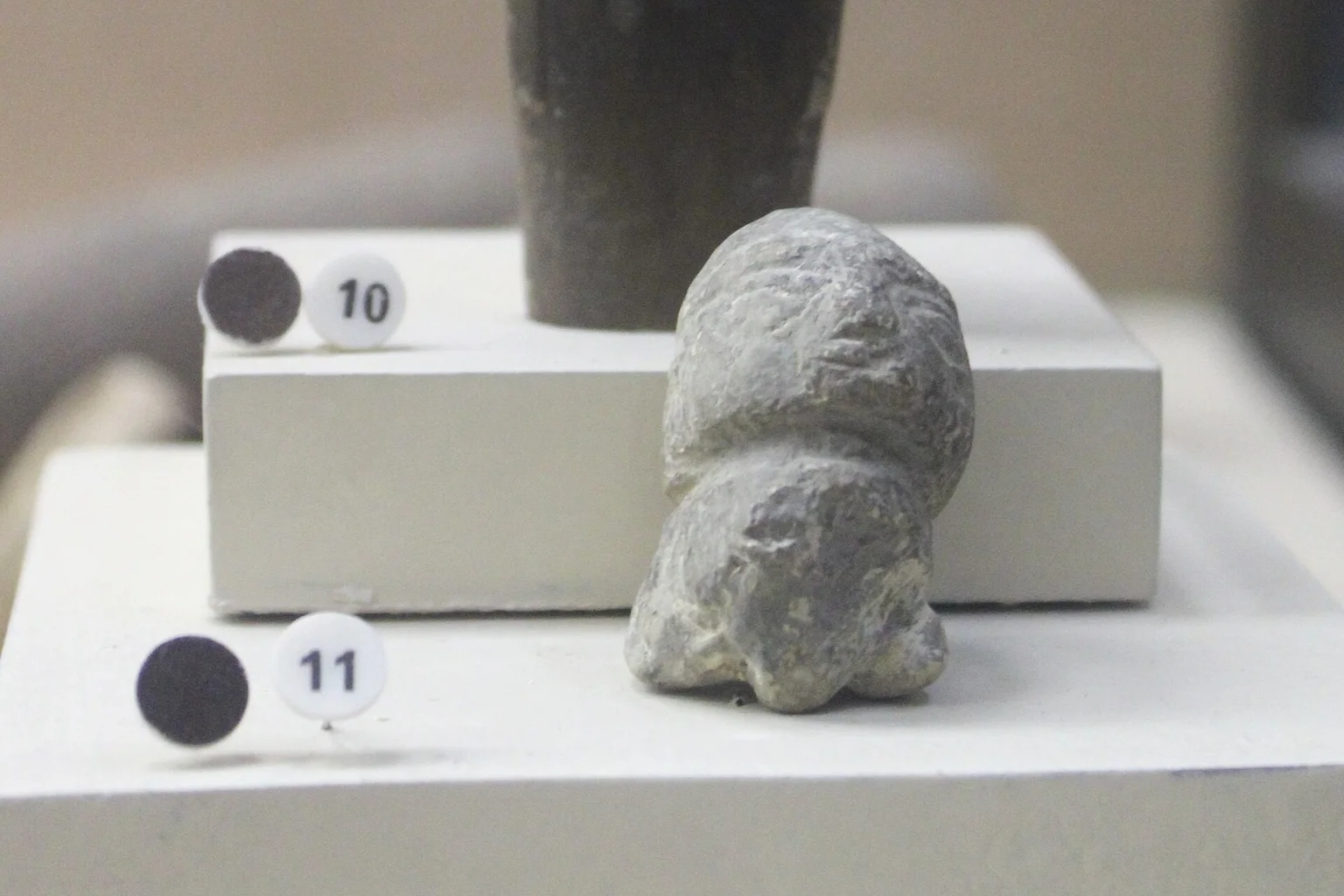
In a PLOS One study reported Nov. 11, archaeologists led by Laurent Davin of the Hebrew University of Jerusalem describe 154 small clay figures and fragments from three Natufian hunter-gatherer sites in Israel, made about 15,000 to 11,650 years ago. Fingerprint measurements suggest that children, some probably under 10, helped adults shape and color them.1
The figures turned up in material nobody had looked at closely. The team re-sorted about 40 kilograms of heated clay and sediment lumps, tens of thousands of small bits that had never been investigated and were thought to be leftovers from making pigment.1 Those leftovers held 15 recognizable figurines and 139 clay cylinders that are probably broken-off bodies and limbs.1
The finds come from Eynan-Mallaha in the Upper Jordan Valley, Hayonim Terrace in the Galilee and el-Wad Terrace on Mount Carmel. The authors say they push the start of clay figurative art in Southwest Asia back to before farming began. They also offer a rare look at what children were doing while the grown-ups made history.1
Mostly ducks, geese and a little red paint
Of the 15 figurines, 11 are birds, mostly waterfowl such as ducks and geese, plus some birds of prey. Two are mammal or gazelle heads and two are human forms.2
Ten of the 11 birds still show traces of red colorant. One Early Natufian piece is the earliest known example of engobe, a thin coat of colored clay slip brushed onto the surface.2
Most of the statues are under 2 centimeters long, roughly the size of a fingertip. That is fitting, since fingertips are what gave the makers away.1
How a fingerprint hints at age
The team measured the width of fingerprint ridges pressed into the clay and compared them with a modern reference set from the Czech Republic. Narrower ridges point to smaller, younger hands.1
The method has real limits. The paper calls this a preliminary study and allows for 2 to 6 percent clay shrinkage. It also cannot tell adult women from young adult men, so its adult category is young adults of both sexes or adult females. Science News summarized the makers as mostly women and children, which simplifies that.1
Usable prints are scarce, too. They appear on fewer than 10 percent of the clay objects. Only seven of the figurines and cylinders (two figurines and five cylinders) had prints that could be identified. Science News counted roughly 60 pieces with prints, a figure that appears to include other clay shapings and ornaments.1
One figure, two pairs of hands
The most striking piece is a tiny Early Natufian human torso from Eynan-Mallaha. It carries a vertical print from a young adult or adult female, with a ridge breadth of 0.456 millimeters. A sideways print from a child who had not yet reached puberty, at 0.345 millimeters, partly covers it.1
The authors suggest an adult handed the figurine to a child partway through modeling it, and they describe it as possible rare, direct evidence of hands-on teaching between generations. That reading rests on this one figurine, and Science News frames it with a “may.” The paper also declines to propose exactly how the pieces were produced, though it says children making the bird figures were most probably guided by an adult tradition.1
Not heirlooms, maybe study aids
The figures show no signs of heavy use, so they probably were not treasured keepsakes. The paper suggests they may have served as portable memory aids for stories and knowledge about birds.1
Davin compared them to children today drawing Disney characters, made less as precious objects and, as he told Science News, “more to learn the story behind them.”1
Part of a growing record of young makers
Children have left marks elsewhere in the deep past. Child-sized handprints appear in 200,000-year-old rock art in Tibet, and child-sized fingerprints mark 30,000-year-old clay sculptures in the Czech Republic.1 An earlier Science Advances study by the same team found child and adult fingerprints on Natufian clay beads.4
Archaeologist Steven Dorland of Grand Valley State University, who was not involved and has studied children’s fingerprints on Indigenous Great Lakes pottery, told Science News the evidence of learning across generations is fascinating. He said it shows the value of looking past adult men when reading the past.1

Did this make your day? Give it a cheer.
Sources
- Stone Age children left fingerprints on ancient art projects Science News (Freda Kreier), 2026-11-11
- 15,000 Years Ago, A Woman and Child May Have Left Overlapping Fingerprints on an Ancient Clay Figurine Discover Magazine, 2026-11-11
- Stone Age kid sculptors? Fingerprints on ancient clay suggest so SWNS syndicated via Yahoo News, 2026-11-11
- Archaeologists Identify Traces of Children's Fingerprints Still Visible on Clay Beads Created 15,000 Years Ago Smithsonian Magazine