Antarctic Blue Whales Rebound Nearly Tenfold, New Estimate Finds
A University of Washington-led study estimates 4,018 Antarctic blue whales, up from about 418 but still only 1.9% of their pre-whaling numbers.

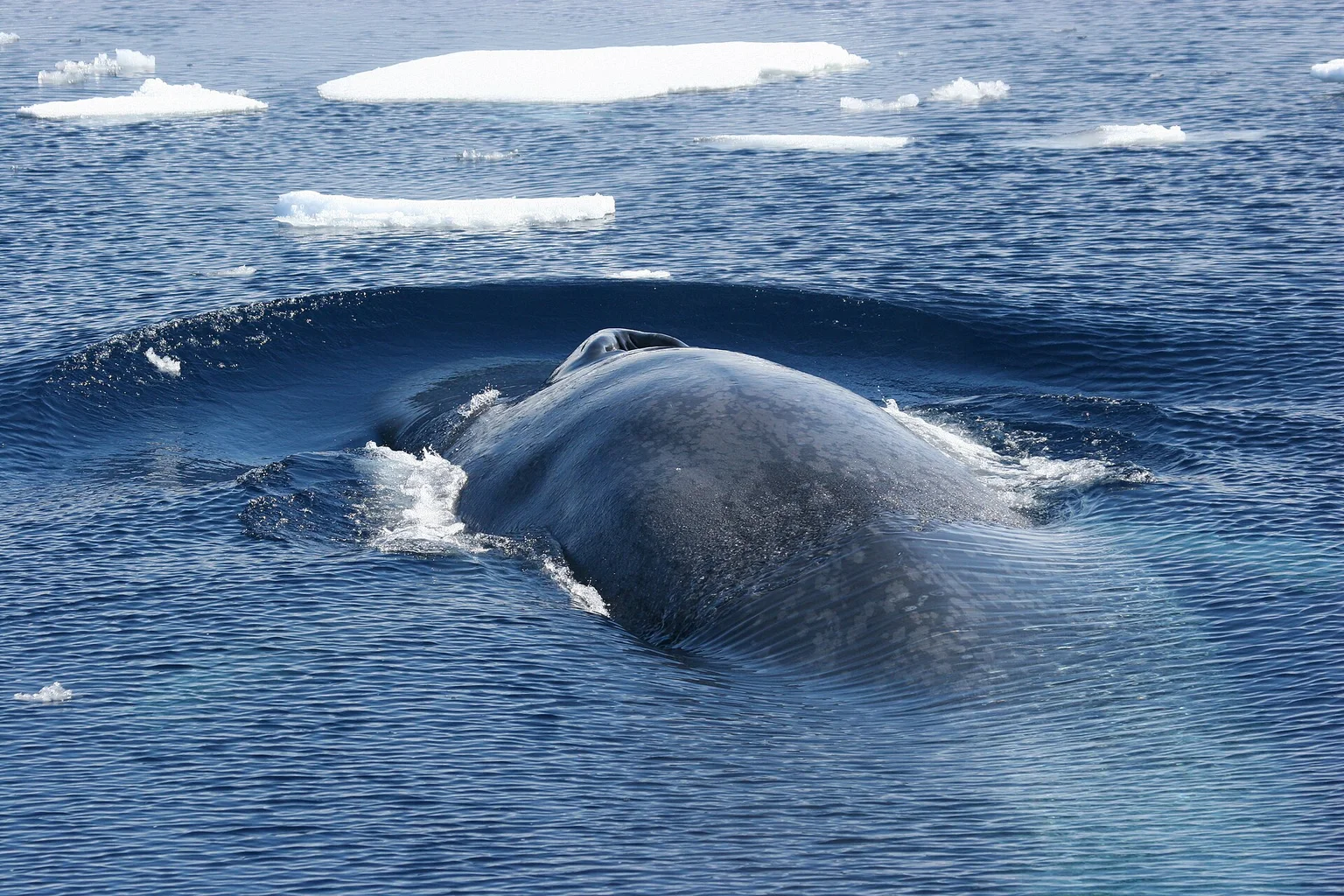
A study led by the University of Washington, published Nov. 5, 2026, in Endangered Species Research, estimates there are now about 4,018 Antarctic blue whales in the Southern Ocean. That is up from roughly 418 after the last reported catch in 1973, according to the university’s announcement. The researchers estimate the population is growing about 4.5% a year.12
The recovery has a limit. The 4,018 whales amount to about 1.9% of the population that lived before whaling, and the species is still listed as critically endangered.13
A population hunted almost to nothing
The researchers’ model puts the population at a peak of 205,905 in the early 1900s. Whaling then cut it by 99.8%, to a low of about 418 in 1974.23
“No whale was hunted quite to the extent that Antarctic blue whales were hunted,” lead author Zoe Rand, a postdoctoral scholar at the UW School of Marine and Environmental Affairs, said in the university’s announcement.2
How the estimate was built
The 4,018 figure is a modeled estimate for 2024, not a head count.1
The team built its model from three kinds of evidence. The first is historical catch records from the whaling era. The second is decades of line-transect surveys. The third, more recently, is photo identification.1
Combining those records let the researchers reconstruct the population year by year from 1904 to 2024. The university describes the study as the first full assessment of Antarctic blue whales in more than 20 years.1
Why the recovery is slow
Antarctic blue whales have one calf at a time, and only every two to three years, so recovery is slow.2
What comes next
The authors say monitoring needs to continue. It is unclear how the whales will respond to environmental change.13
Rand hopes future technology such as passive acoustic monitoring will make that job easier.1
Keeping watch is also a shared job. “Antarctica is a big place, and it’s not just one country’s ocean,” Rand said in the university’s announcement.1
Whether the whales will ever return to their earlier numbers is still open. “I think it’s probably an open question whether they will make it back to pre-whaling levels,” Rand said.5
Did this make your day? Give it a cheer.
Sources
- As Antarctic blue whales advance along the road to recovery, continued oversight is key University of Washington (UW News), 2026-11-05
- As Antarctic blue whales advance along the road to recovery, continued oversight is key EurekAlert! (UW release), 2026-11-05
- As Antarctic blue whales advance along the road to recovery, continued oversight is key Phys.org (UW release), 2026-11-05
- This Blue Whale Population Grew 1,000% Since the End of Antarctic Whaling Good News Network, 2026-11-18
- Antarctic Blue Whales Recover, but Oversight Remains Key Mirage News (UW release), 2026-11-06
- Blue whales are returning to Antarctica. Their population has increased nearly tenfold Wody Nasze / wodnesprawy.pl, 2026-11-15