Hortobágy’s Cranes Hit 166,745 in a Year Drought Took 90% of the Region’s Maize
Hungary's Hortobágy National Park says its Oct. 8 count of 166,745 cranes topped last year's 153,165, but drought took 90% of the region's maize, a key autumn crane food.

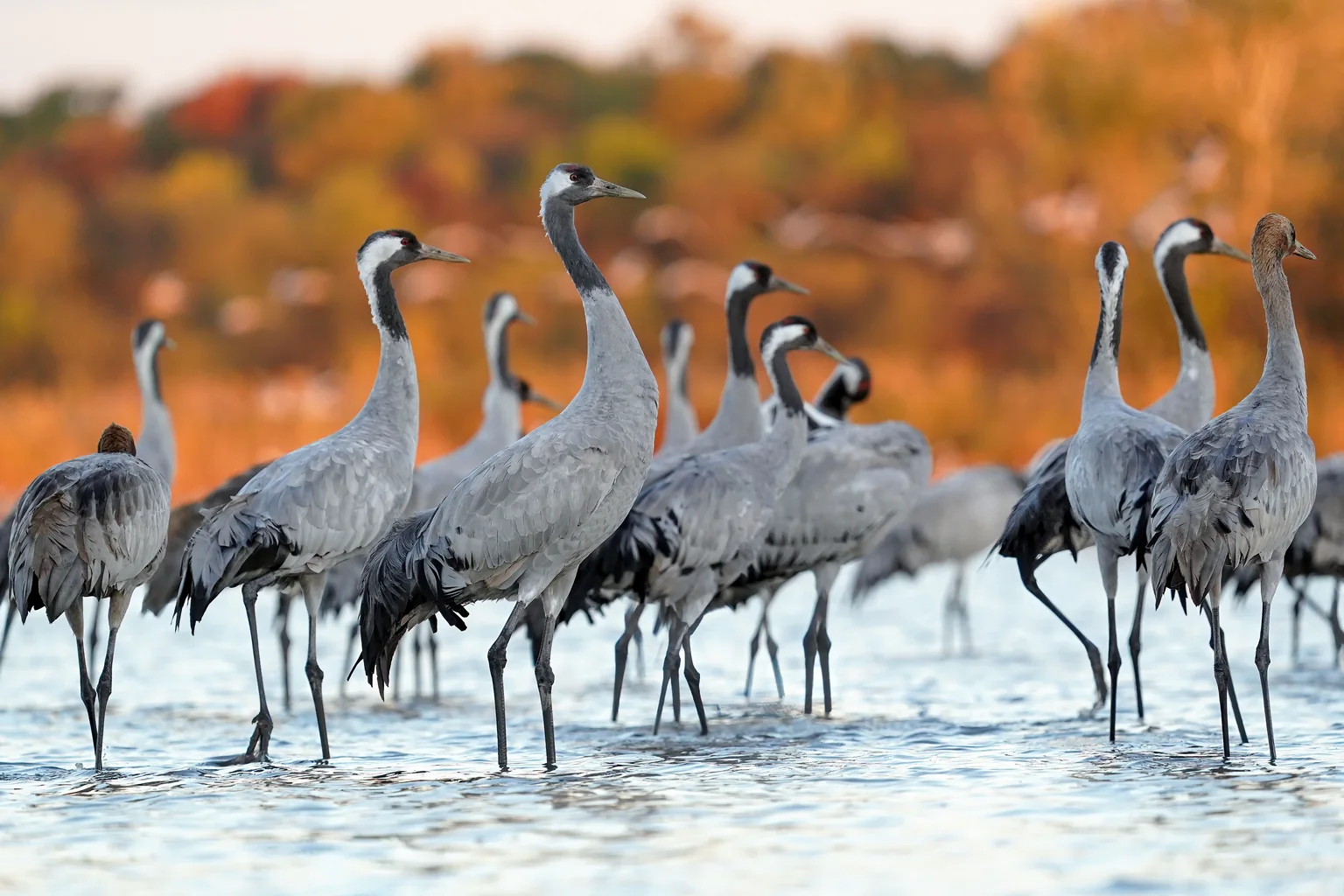
Hortobágy National Park in eastern Hungary counted 166,745 common cranes on Oct. 8, this autumn’s peak and higher than the 153,165 it reported in October 2025. József Katona of the Hortobágy National Park Directorate shared the figure in an email interview with Hooray News on Nov. 4. The park also hosted the 11th International Crane Conference on Oct. 20-23.6
“This autumn’s peak count was 166,745 cranes, recorded during our synchronised count on 8 October,” Katona wrote. The total combines counts from 14 roosting sites in the Hortobágy area, where the birds gather to spend the night.6 Nobody rounded.
Our earlier story on Nov. 3 described how the Eurasian crane, still a rare visitor to Hortobágy until the mid-20th century, has become increasingly common on migration since the 1990s.4 By the park’s own counts, autumn peaks in recent years have regularly topped 150,000. The park calls Hortobágy the world’s most important stopover site for the species, a claim it makes about its own counts.1 The park’s website says 95% of the cranes migrating through Hungary pass through Hortobágy.2
What the 11th International Crane Conference covered
The conference returned to the place that hosted the first one, in 1985.1 According to Katona, nearly 50 crane researchers from 14 countries attended alongside Hungarian guests. They gave 34 presentations and reviewed the IUCN Red List status of all 15 crane species. The Red List is the global ranking of how threatened each species is.6
Katona said discussions focused on three themes:6
- Bird flu. How outbreaks of highly pathogenic avian influenza between 2023 and 2025 hit cranes, especially common and sandhill cranes, and how veterinary measures and lower human-related risks might prevent future outbreaks or soften their impact.
- Threatened species. Conservation work on wattled, black crowned and grey crowned cranes in Africa; black-necked, Siberian, sarus and red-crowned cranes in Asia; and whooping cranes in North America.
- Migration and people. New tracking studies of crane routes and wintering areas, plus ways to handle crop damage, including agricultural support schemes.
The next conference is likely to be held in northern Italy in 2029, though the location has not been confirmed.6
Drought is the biggest challenge for Hortobágy’s cranes
During their stopover, the cranes spend the day feeding on farmland around the park’s grasslands, mostly on maize grains left in the fields after harvest. In the evening they return to shallow wetlands to roost.6
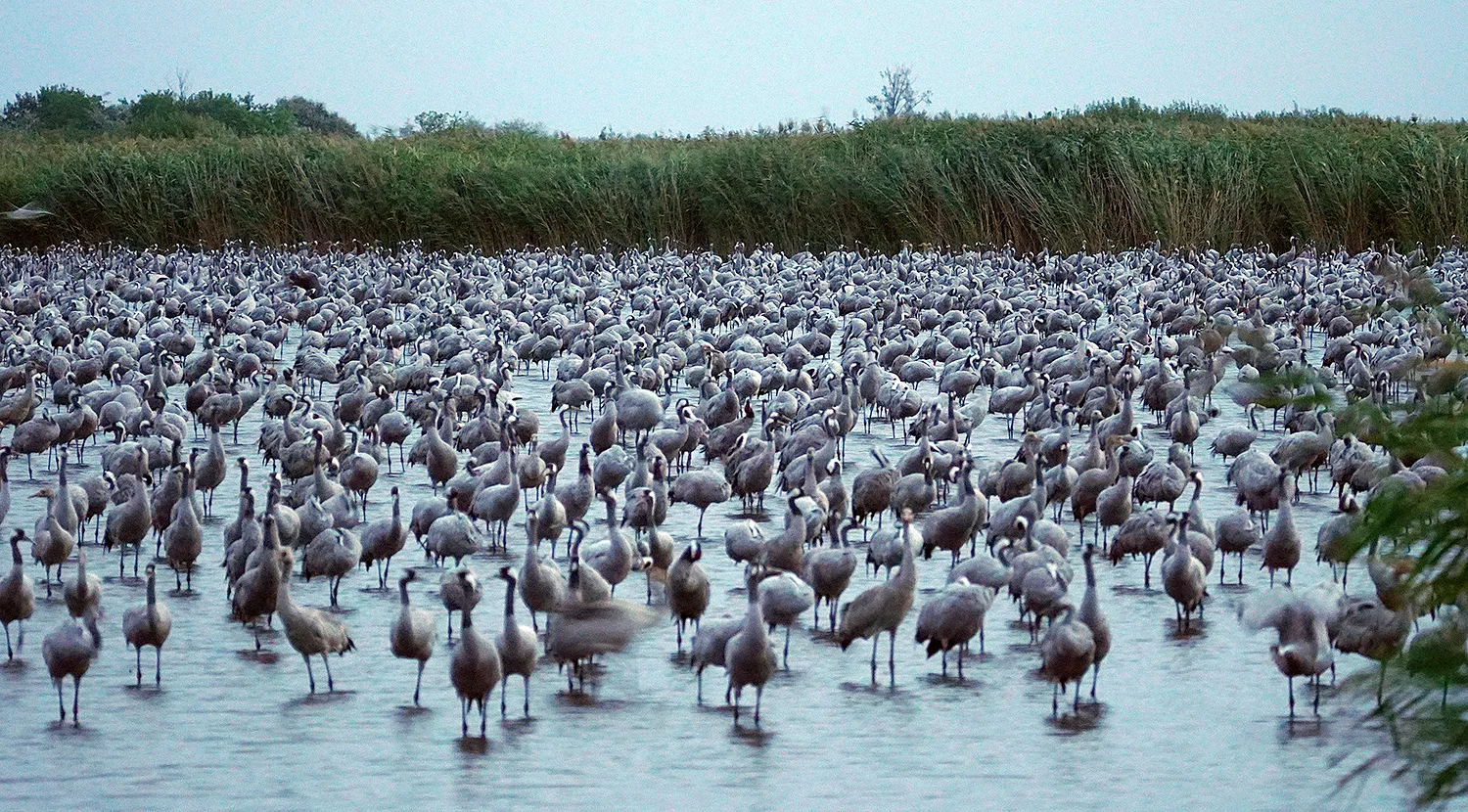
“Our most important task is to maintain a network of shallow-water roosting sites within the protected areas of Hortobágy National Park, where cranes can rest undisturbed,” Katona wrote. Waterfowl hunting is banned at those sites.6
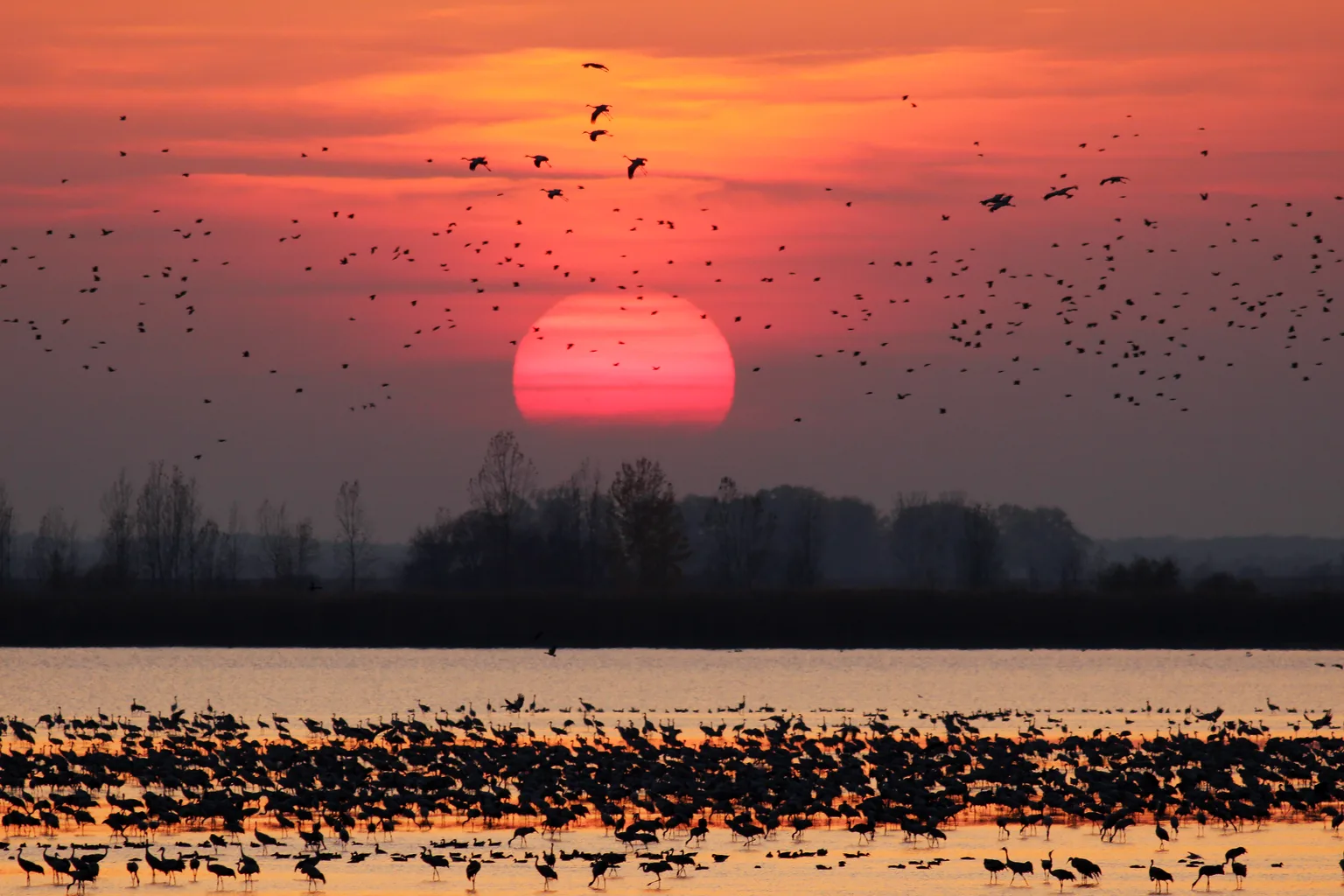
Katona named increasingly frequent and severe drought, linked to a warming climate, as the greatest challenge ahead. Long dry spells shrink wetlands and make good roosting sites scarcer. “In 2026, Hortobágy and the surrounding region experienced their most severe drought in a century,” he wrote.6 The park had warned in September that the drought may affect this year’s migration.3
The dry year also hit the cranes’ food. “This year, 90% of the region’s maize crop was lost to extreme summer heat and a complete lack of rainfall,” Katona wrote. If such conditions persist, he said, maize growing may no longer be viable there. Cranes are opportunistic, adaptable feeders, but losing that food along with wetland roosts could significantly change what they find at Hortobágy.6
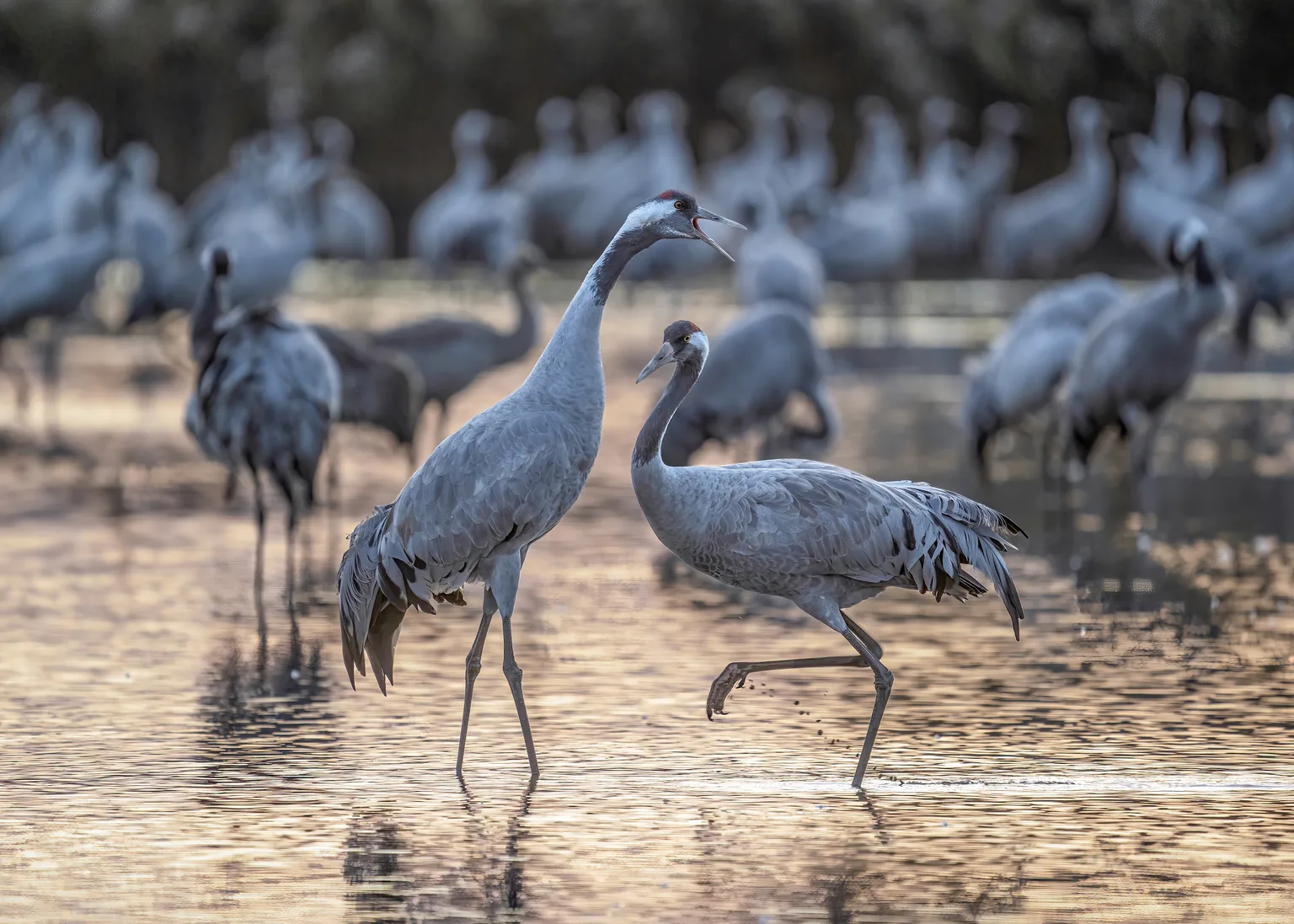
How to watch the cranes without disturbing them
Throughout October, the park runs guided crane-watching tours every day at dusk, plus dawn tours on selected dates. Its Visitor Centre explains how to watch without bothering the birds.6
Visitors with a national park entrance card can watch flocks arrive at several designated sites on their own. Information boards spell out the rules: no noise, no flashlights, no drones. “Following these simple rules allows visitors to enjoy the spectacle while giving the birds the peace they need,” Katona wrote.6
Rangers patrol the viewing sites, and Katona said serious problems are uncommon. Usually only an occasional reminder is needed. For the coming autumns, the park plans to keep maintaining and improving its visitor facilities while keeping disturbance to a minimum.6
Did this make your day? Give it a cheer.
Sources
- Hortobágyi Nemzeti Park - Crane Conference 2026 Hortobágy National Park Directorate, 2026-10-20
- Stunning Photos Showcase Journey of Cranes Over Hortobágy Wetlands Hungary Today, 2025-10-20
- Cranes arrive in Hortobágy as autumn tours begin Debrecen Sun, 2026-09-07
- Cranes Once Rare in Hungary's Hortobágy Now Arrive by the 150,000 Hooray News, 2026-11-03
- Autumn Migration of Cranes Captured in Breathtaking Photos Hungary Today
- Email interview with József Katona, one of the lead organizers of the 11th International Crane Conference, Hortobágy National Park Directorate (Nov. 4, 2026) Hooray News interview, 2026-11-04