Five Thornback Ray Eggs Came Up in Fishing Nets. A Resort Aquarium Took Them In.
In Greece's Halkidiki, a project hatches thornback ray eggs pulled up in fishermen's nets and frees the young rays. Two went back to sea in 2026.

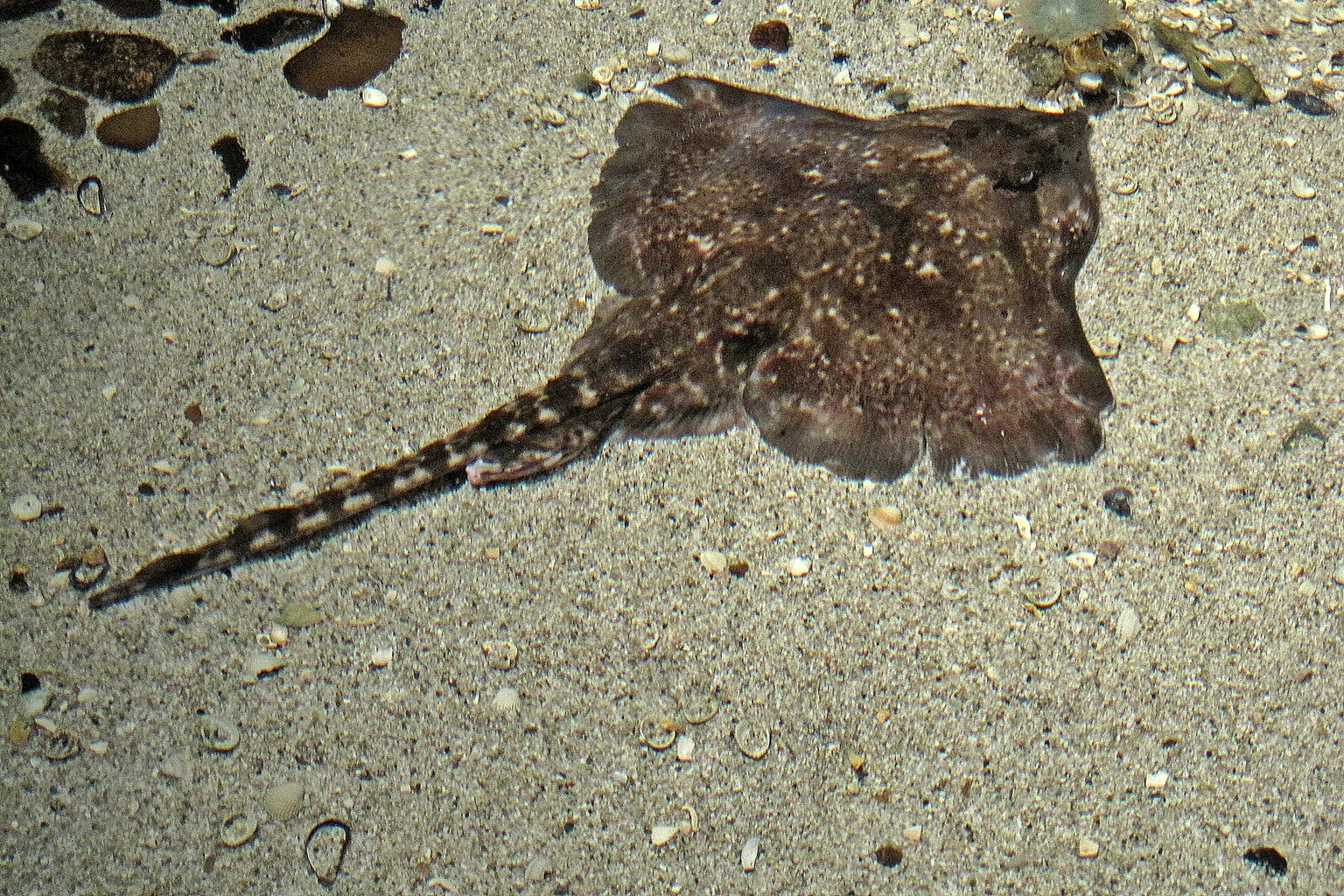
A newborn thornback ray made its first movements minutes after hatching in an aquarium on Greece’s Kassandra peninsula, in footage Euronews published Nov. 10, 2026. Its egg was one of five rescued from fishermen’s nets by a Greek conservation project, which hatches such eggs and releases the young rays into the Thermaic Gulf. Two have been released so far in 2026.1
The work matters because rays are in trouble in Greek waters. Almost half of the ray species found there are at risk of extinction, according to the Greek Red List, and the main threat is by-catch, meaning animals caught by accident in nets meant for other fish.13
Why the eggs end up in nets
The species is the Kalkanovatos ray. Its scientific name is Raja clavata, the thornback ray, a skate-type ray that lays eggs.4 When a female is caught by accident, the stress may make her release her eggs. Those eggs often end up in the sea with no chance of completing their development.1
The Thermaikos Biodiversity Project, run by the Greek environmental group iSea, gives eggs collected from fishermen’s nets a second chance. The program protects biodiversity in the northern Aegean Sea. It began five years ago as a project to monitor dolphins and has grown since then.12
In the Euronews report, scientific coordinator João Bernardo describes the programme in just those terms: a second chance for the eggs.1
A nursery inside a resort
The aquarium sits inside the Sani resort on the Kassandra peninsula and replicates the temperature and conditions of the surrounding sea. Sani Resort is also the project’s listed funder.12 Few fish begin life at a resort, and these ones check out within days.
A scientific team monitors each egg until it hatches and keeps watching afterward. The young rays are monitored for research in cooperation with the Lamna Institute in Valencia, Spain. A few days after hatching, iSea divers release the rays at a depth where the water temperature and quality resemble the aquarium.1
Small numbers, early days
The scale is still modest. Two rays have hatched and been released around Halkidiki in 2026, and more eggs are under observation and expected to hatch soon.1 Euronews did not report how the released rays fare afterward, and it noted that their survival in the open sea is far from guaranteed.1
The program has done this before. In October 2025, The Greek Herald reported the first such hatching and release in Greece, which iSea describes as the first documented hatching and release of a Kalkanovatos ray in the country.23 That egg case measured 6 cm, and the ray that came out of it was 10.5 cm long. The species can eventually reach about 80 cm.3
That first success took cooperation. Fishermen from Halkidiki and the Thracian Sea had worked with iSea for two years to hand over egg cases, and the team drew on protocols from Spain’s Associació Lamna.3 iSea lists restoring threatened shark and ray species among the project’s goals.2
Did this make your day? Give it a cheer.
Sources
- 'Second chance of survival': Newborn stingray takes first swim before being released back into wild Euronews (Ioannis Giagkinis), 2026-11-10
- Thermaikos Biodiversity Project - iSea iSea (environmental organisation), 2026-08-20
- First stingray hatched and released in Greece marks conservation milestone The Greek Herald, 2025-10-04
- A second chance at life: two small stingrays were raised and released into the sea in Halkidiki Athens News (en.rua.gr), 2026-11-10