Chimpanzees Learn When to Blow a Raspberry, a New Study Suggests
A PNAS study of 91 chimps in Ivory Coast and Sierra Leone suggests they learn when to use one call, the lip-flapping raspberry, partly by following adults.

Chimpanzees appear to learn when to use at least one of their calls, an unvoiced “raspberry” sound, instead of simply being born knowing, according to a study published in November in the journal PNAS. Researchers from the CNRS Institute of Cognitive Sciences, the University of Warwick and the Taï Chimpanzee Project compared 91 wild and sanctuary chimps in Ivory Coast and Sierra Leone.12
The raspberry is what it sounds like: a sound much like a person blowing a raspberry with their lips. It is “unvoiced,” meaning it is made without using the vocal cords.2 Scientists had generally assumed chimpanzee calls like this were mostly instinctive and fixed by biology. If a call’s use can be learned instead, that says something about how communication, and maybe language, got started.3
Grooming talk in the wild, everything talk at the sanctuary
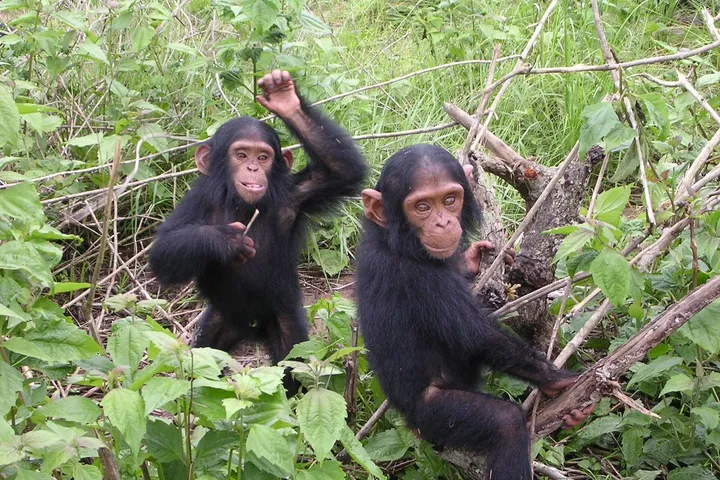
The team studied four wild chimpanzee communities in Taï National Park, Ivory Coast, and four communities of orphaned chimpanzees raised alongside other young chimps at Tacugama Chimpanzee Sanctuary in Sierra Leone. The chimps ranged from newborns to 55 years old, and the groups differed in whether adults were around to set an example.12
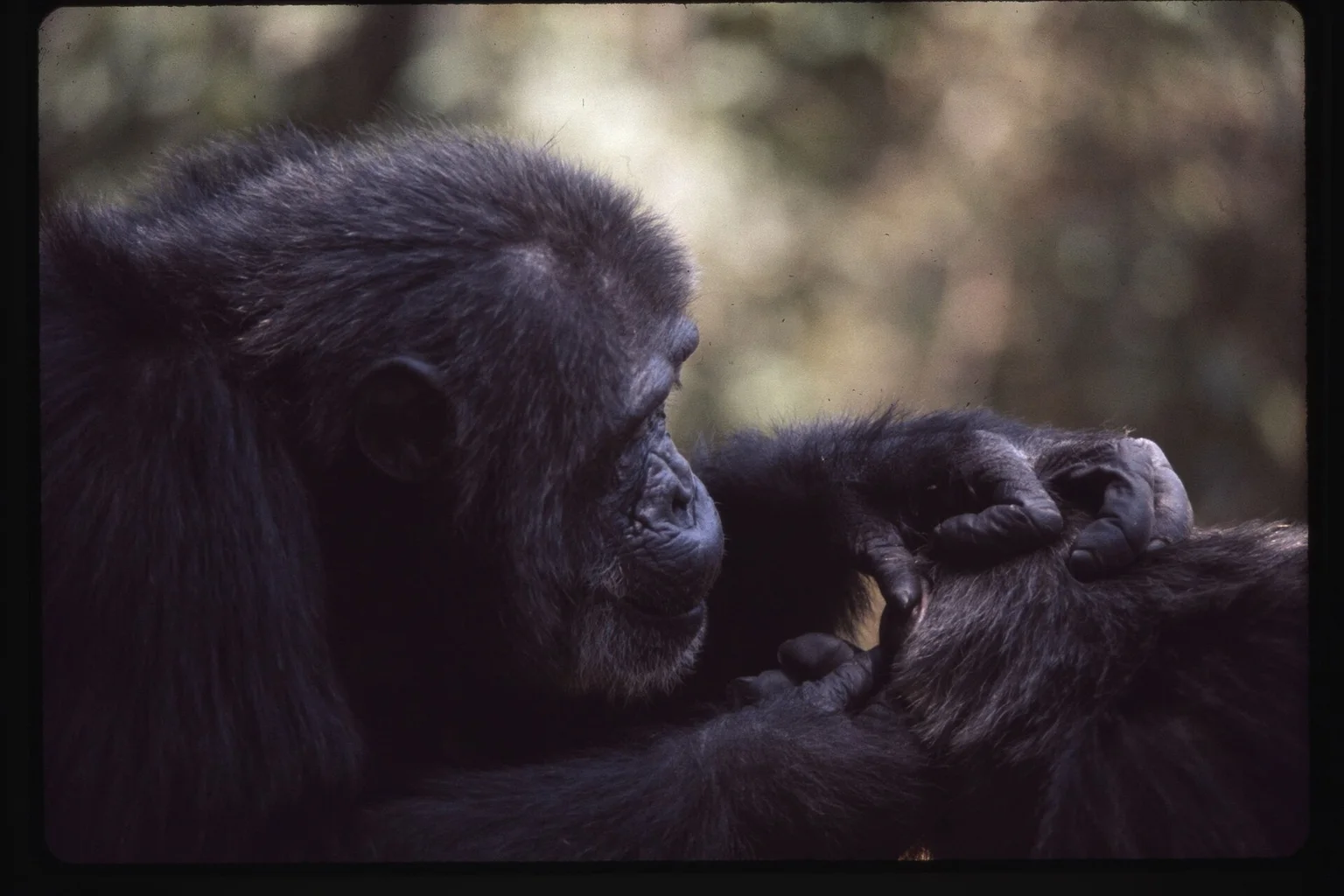
In Taï, the pattern was tidy. Wild chimps used the raspberry almost only while grooming one another, and that habit was shared across groups and ages. It held steady over the six years of the study.13
The orphans at Tacugama blew raspberries too. They just did it across all sorts of unrelated social situations, a use the researchers described as chaotic.3 Same sound, no shared agreement on when it belongs.
Then a grown-up moved in
The most telling moment came when an adult chimpanzee joined one of the sanctuary groups. Over time, the group’s raspberry use became more consistent and started to look like the newcomer’s. The researchers interpret this as adults acting as role models, which they say parallels one part of how human children learn words from the people around them.34
“Even aspects of chimpanzee vocal communication that seemed fixed and unlearned may be shaped by learning, suggesting that there is still much to discover about their vocal repertoire,” said Antoine Valet, the study’s first author, in the release from CNRS and the University of Warwick.2
What the study does and doesn’t show
The authors and their institutions call this the first evidence of learned vocal conventions, meaning agreed-upon habits for using a call, in great ape communication. That “first” is their claim.2 The study is observational: the PNAS paper calls it “quasi-experimental,” because the researchers compared existing groups instead of running a controlled experiment.1 Since the sanctuary chimps were orphans raised mostly with each other, comparing them with wild groups cannot rule out every other difference between their lives.
The finding also covers one type of call. Chimpanzees, unlike people, struggle to learn entirely new call sounds. What they appear to learn is the link between a sound they already make and the situation where it is used.4 Coverage of the study notes that this supports learned conventions but does not show human-like words, or that every listening chimp takes the same meaning from a call.5
The work also makes a quiet case for keeping wild chimpanzee communities intact, since that is where these traditions can be watched over years.
“Preserving wild chimpanzee populations is critical if we want to continue to understand the extent to which chimpanzees learn and perpetuate their vocal communication,” said Roman Wittig, director of the Taï Chimpanzee Project and the study’s senior author, in the same release.2
Did this make your day? Give it a cheer.
Sources
- A signal convention in natural chimpanzee communication PNAS, 2026-11-10
- Chimpanzees blowing raspberries offers first evidence of learned vocal conventions in great ape communication EurekAlert! (CNRS/University of Warwick release), 2026-11-10
- Chimpanzees learn when to use some of their calls - with parallels to how humans learn words EurekAlert! (press release), 2026-11-10
- Chimpanzees' Raspberries Reveal Learned Vocal Conventions Mirage News (University of Warwick release), 2026-11-11
- Chimpanzees learn vocal communication much like humans learn words The Brighter Side of News, 2026-11-11