Home Buying Starts Unglamorously: A List of Everything You Spent Last Month
The CFPB's free guide for first-time U.S. home buyers turns a vague dream into a budget, from tallying spending to finding down payment help nearby.


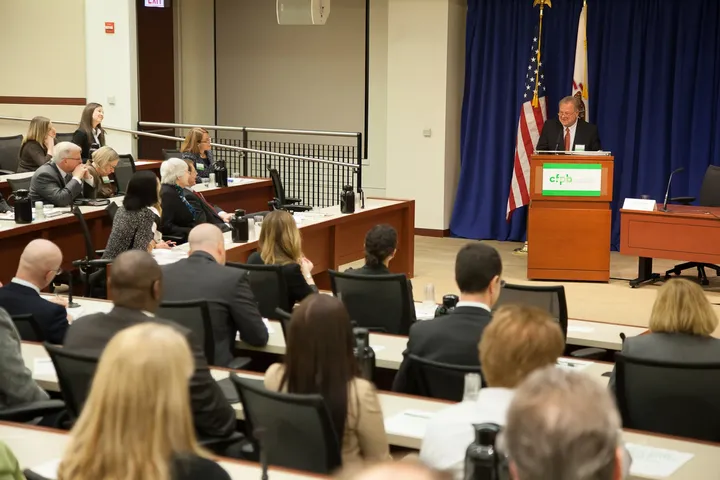
The Consumer Financial Protection Bureau, the federal agency that looks out for people’s finances, offers a free plain-language guide for first-time U.S. home buyers. Updated in February 2026, it shows how to figure out what you can afford, how big a down payment to aim for and where to find help paying for one.1
None of it requires a finance degree. The guide starts with the least glamorous document in any home purchase, a list of what you spent last month. Then it works forward from there.1
Here is the CFPB’s approach, broken into steps you can start this week. This is general guidance, not advice for your situation.
1. Write down a month of spending
The CFPB suggests listing everything you spent during the month, then comparing that total with your monthly take-home pay. Take-home pay means what actually lands in your account after taxes and deductions.1
2. Find your comfortable monthly home payment
Once you know the gap between what comes in and what goes out, the guide says to work out how much you can afford for your total monthly home payment.1 Note the word total. The mortgage is only one piece of it.
3. Protect your emergency cushion
The CFPB’s “Owning a Home” guide tells buyers to decide how much they will save each month for emergencies and other goals once they own the place.2 It describes an emergency cushion as usually three to six months of expenses, and it subtracts that money before figuring out your down payment.2
4. Work out your maximum down payment
The CFPB’s method is mostly subtraction. Add up your savings and investments. Then take out money for other goals, moving, renovations and that emergency cushion. Finally, subtract your estimated closing costs.2
Closing costs are the fees paid when the sale is finalized. The CFPB says they typically run 2% to 5% of the purchase price, on top of the down payment.2 The bureau also reminds buyers to budget for repairs, improvements and new things the home will need.1
5. Weigh a bigger down payment against a smaller one
Putting more money down means borrowing less, so you have less to pay back. The CFPB says that saves money especially in the early years of a mortgage, though it can leave you with less cash for everything else.1
The 20% mark matters. A down payment under 20% of the price likely means paying for mortgage insurance, which raises your monthly cost.23 Putting down at least 20% typically lets you skip it, according to a 2017 CFPB blog post.4 If you plan to put down less, the CFPB says you may need to lower your target price.2
The bureau’s general rule of thumb runs like this. About 3% down is the minimum in most cases, at least 10% can often save money, and 20% saves the most.6
6. Look for down payment help
A small savings account doesn’t automatically rule you out. The CFPB says many programs help people buy with a small down payment or none at all.12 According to the CFPB, FHA loans, which are backed by the Federal Housing Administration, can require as little as 3.5% down. Conventional loans backed by Fannie Mae or Freddie Mac can require as little as 3%.2
Keep the tradeoff from step 5 in mind. A smaller down payment means borrowing more and often paying mortgage insurance, so what saves cash up front can cost more over time.12
You may also qualify for down payment assistance from a state or local government or a nonprofit. The CFPB points buyers to local housing counselors and a directory of programs.2 California’s Department of Financial Protection and Innovation notes that eligibility for these programs depends on where you live and what you earn.5
Programs and loan terms change, so check the CFPB’s current Owning a Home pages before you make plans. A month of honest spending notes won’t buy a house, but it will show you how far away one is, and that is a real place to start.
Did this make your day? Give it a cheer.
Sources
- Prepare your money situation before you buy a home Consumer Financial Protection Bureau, 2026-02-20
- Figure out how much you want to spend Consumer Financial Protection Bureau, 2026-02-18
- What is mortgage insurance and how does it work? Consumer Financial Protection Bureau
- How to decide how much to spend on your down payment Consumer Financial Protection Bureau (archived blog), 2017-01-31
- Consumer Financial Education: Housing California Department of Financial Protection and Innovation
- Determine your down payment Consumer Financial Protection Bureau