2 Bald Eagles That Shared a Flight Cage Return to Cape Breton Together
Two bald eagles that recovered at a Nova Scotia raptor rehab center were freed in Cape Breton Highlands National Park, then settled into the same tree.

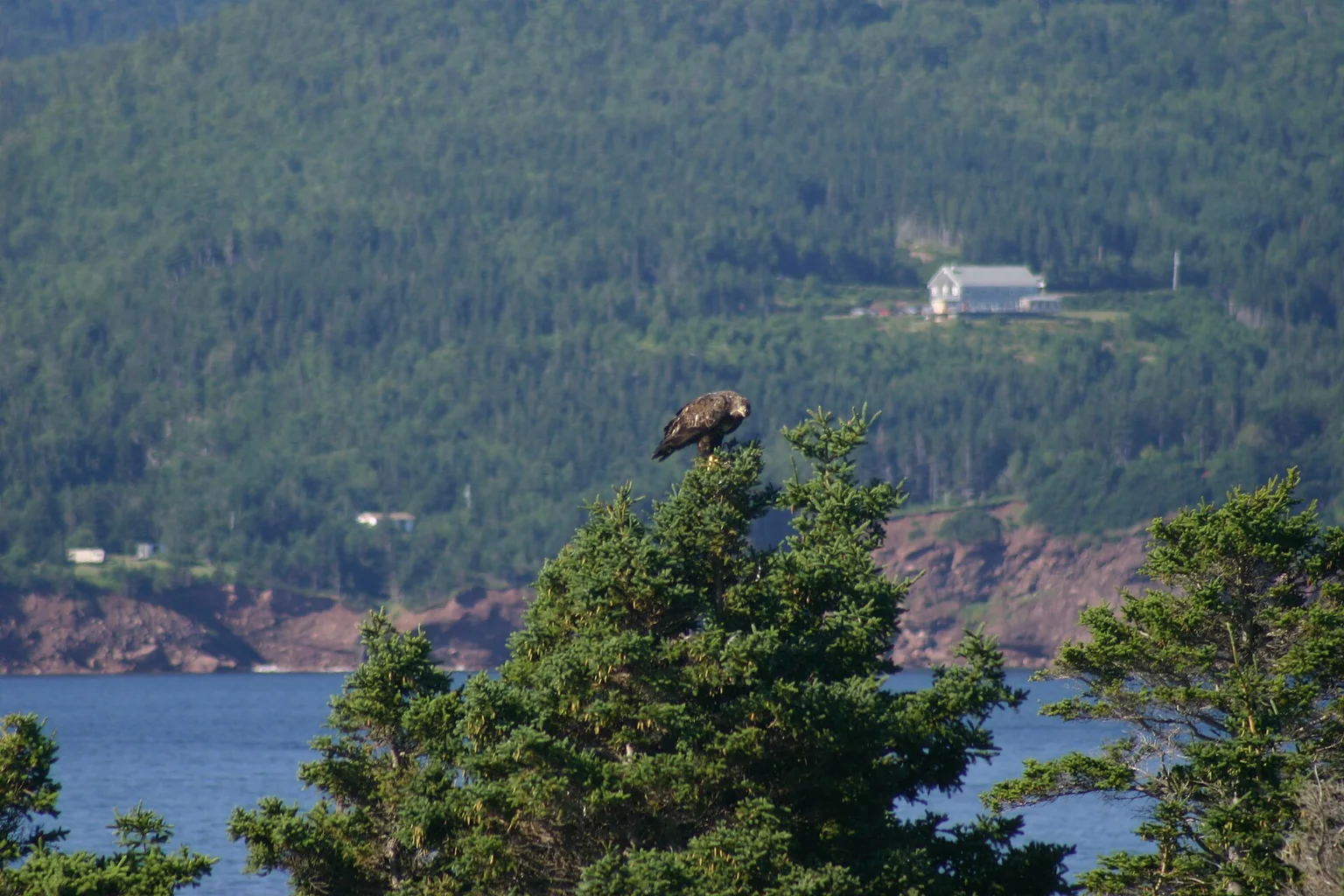
Parks Canada went to Cape Breton Highlands National Park to release one bald eagle. Two eagles flew away.1
The extra passenger had been in rehabilitation for about a year. For much of that time it shared a flight cage with the eagle the park staff came for, a bird named Parker. Both birds were returning to the same general area, so the Cobequid Wildlife Rehabilitation Centre asked to send them home together. The team agreed.1
CBC News reported that one of the two eagles had recovered from severe lead poisoning, which a Parks Canada officer describes as an ongoing threat to the region’s birds of prey.31
A recovery that took two years
Parker’s story began when a local resident reported an injured eagle in a decommissioned section of the park’s campground. When Parks Canada staff arrived, the bird was upright but stumbling and not behaving normally.1
On November 1, 2024, Parker was taken to the Cobequid center, which specializes in raptors, or birds of prey.1
His recovery took far longer than Parks Canada had expected. Parks Canada officer Amanda Gallant described the wait in the Your Quad Counties report:1
“We couldn’t believe it. It had been two years and they kept saying he’s recovering, but he’s still not fully recovered.”
After about two years, the center said Parker was ready to go home. CBC also reported that one of the released birds had spent the last two years recovering.12
A runway with an ocean view
The release happened in an open field near the top of one of the park’s trails, looking out over the coastline. The open space gave the eagles a running start.1
Staff opened the boxes and let the birds leave on their own. The first eagle circled the field. Parker followed, spotted the other bird, and the pair headed off along the coast together. They ended up roosting in the same tree.1
After so much time in the same flight cage, they did not seem inclined to change the arrangement.
Why lead keeps showing up
Gallant said lead poisoning is an ongoing problem for birds of prey in the region, and the rehabilitation center receives affected birds every year.1
Lead gets into the food chain in two main ways, according to Gallant: fragments of hunters’ lead ammunition left behind in carcasses, and fishing weights.1
A very small piece is enough to do harm. Even a tiny bit of lead can reach toxic levels and affect a bird’s brain function, she said.1

Did this make your day? Give it a cheer.
Sources
- Two bald eagles take flight after long road to recovery - Your Quad Counties Your Quad Counties (1015 The Hawk / Radio ABL), 2026-10-27
- Watch this injured bald eagle soar again CBC News, 2026-10-29
- Bald eagle that survived lead poisoning flies again CBC News, 2026-10-28