Farmer's Odd Stone Leads to Colossal Ramesses II Head in Egypt's Nile Delta
Khaled al-Shahat reported an inscribed block on his land. Excavators then found a giant Ramesses II head, and Egypt honored him for his honesty.

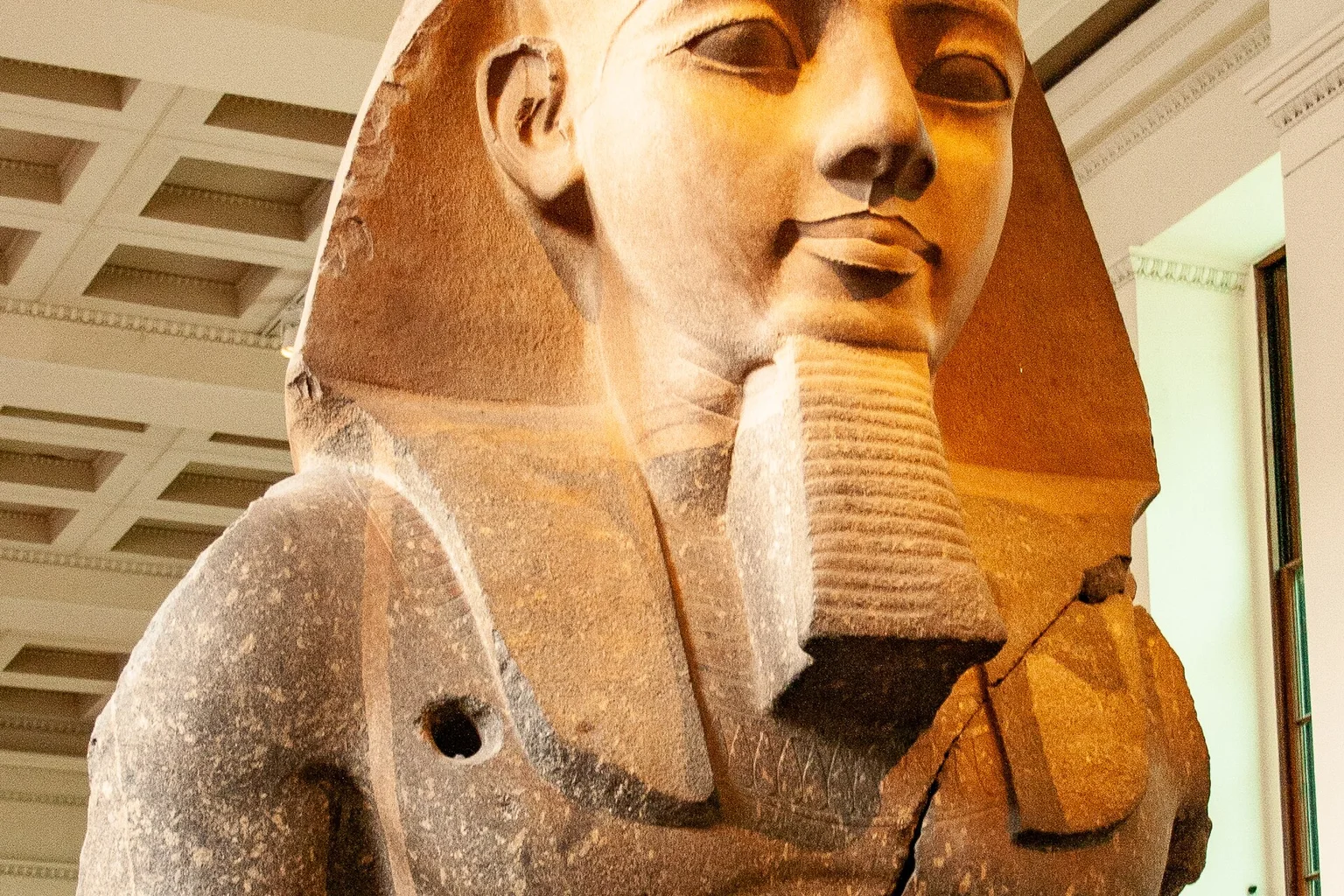
A farmer working his land in Behbeit El-Hagar, a village in Egypt’s Nile Delta, noticed an unusual stone. He reported it. That decision led archaeologists to a colossal granite head of Ramesses II and most of a second royal statue.1
The find adds new pieces of one of ancient Egypt’s best-known kings to the country’s heritage. It also gives archaeologists a fresh spot to dig in a village already known for the remains of a major temple of Isis.2
Farmer Khaled al-Shahat described the moment to CBS News:1
“I was working on my land on Friday when I came across an unusual stone. I informed the relevant authorities, and they came to examine it.”
A block with the king’s titles
The stone turned out to be a pink granite block about 1.3 meters (a little over 4 feet) long. According to Egypt’s Ministry of Tourism and Antiquities, it carries two royal titles of Ramesses II: “Nesw-Bity,” meaning King of Upper and Lower Egypt, and “Sa-Ra,” meaning Son of Ra.14 As name tags go, it was hard to misread.
The local antiquities inspectorate first confirmed the block was an ancient artifact and documented it. A mission from the Supreme Council of Antiquities then carried out a rescue excavation, an urgent dig to record and protect antiquities that turn up by chance.34
A head about the height of a person
The excavators uncovered a colossal head of Ramesses II, about 1.6 meters high. It wears the double crown, the combined crown of Upper and Lower Egypt.24 Dr. Hisham El-Leithy, Secretary-General of the Supreme Council of Antiquities, provided the technical details.34
The team also found part of the statue’s back pillar, the stone support running up its back, which bears the king’s Horus name, one of his official royal names.12
Based on the size of the head, archaeologists estimate the complete figure stood about 28 feet tall. The Egyptian Gazette puts that at about 8.5 meters including the base.12
The dig also turned up most of a second royal statue, about 2.4 meters long. It is missing its legs, its base and part of its nemes, the striped cloth headdress worn by pharaohs. Its face is well preserved and resembles the first statue’s. It is believed to depict Ramesses II too, though no inscription naming him on it has been reported.16
Al-Shahat told CBS News what came next:1
“I was surprised and happy when they discovered more antiquities. They told me this might change the history of the area.”
Honored at home
Most farm chores do not end with a visit from a government minister. On Wednesday, Oct. 14, 2026, Tourism and Antiquities Minister Sherif Fathy traveled to the farmer’s hometown in Gharbia Governorate. He gave al-Shahat and his wife certificates of appreciation and an Umrah pilgrimage trip to thank him for reporting the find.15
In a statement quoted by CBS News, the ministry said: “The minister insisted that the citizen be honored in his village, on his own land, and among his family and fellow villagers, in recognition of his honesty, awareness, and sense of responsibility.”1
Excavations and studies are continuing on al-Shahat’s land to learn more about the statues and about the area’s history and architecture.12
Did this make your day? Give it a cheer.
Sources
- An Egyptian farmer found "an unusual stone." It led archaeologists to pieces of statues for an ancient king. CBS News (Ahmed Shawkat, Cairo), 2026-10-15
- Farmer's discovery in the Nile Delta puts Ramesses II back in the spotlight Egyptian Gazette, 2026-10-13
- Archaeologists uncover colossal statues of Ramses II in Egypt HeritageDaily, 2026-10-14
- New discoveries at Behbeit el-Hagar Archaeology Wiki (reproducing Ministry of Tourism and Antiquities release), 2026-10-15
- Egyptian villager's chance find reveals giant Ramesses II statue The New Arab, 2026-10-15
- An Egyptian Villager Stumbled Upon an Inscribed Stone. It Led to a Colossal Head of Ramses II Gizmodo, 2026-10-16
- Egypt: A citizen reports an engraved stone; excavations reveal two royal statues, one of which is of Ramses II Finestre sull'Arte, 2026-10-15